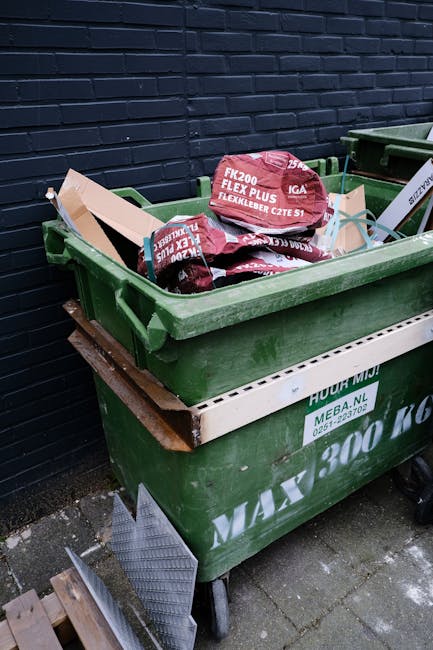
Great Hollands bulk rubbish collection guide RG12
If you are trying to clear bulky waste in Great Hollands, you probably want one thing: a simple, reliable way to get it gone without turning the driveway, hallway, or front path into a mini dumping ground. This Great Hollands bulk rubbish collection guide RG12 walks you through how bulky waste removal works, what to check before you book, what items need special handling, and how to avoid the usual headaches. Whether you are emptying a garage, clearing out furniture, or dealing with a mixed pile after DIY, the process can be straightforward once you know the basics. Truth be told, most problems come from poor sorting and last-minute surprises, not from the collection itself.
For readers who want to compare clearance services while they plan, it can also help to look at related pages such as general waste removal, furniture clearance, and builders waste clearance. They each cover slightly different jobs, and that distinction matters more than people think.
Table of Contents
- Why this bulk rubbish collection guide matters in Great Hollands RG12
- How bulk rubbish collection works
- Key benefits and practical advantages
- Who it is for and when it makes sense
- Step-by-step guidance
- Expert tips for better results
- Common mistakes to avoid
- Tools, resources and recommendations
- Law, compliance, standards and best practice
- Options, methods and comparison table
- Case study or real-world example
- Practical checklist
- Conclusion
- Frequently asked questions
Why Great Hollands bulk rubbish collection guide RG12 Matters
Bulk rubbish collection is not just about removing "stuff." It is about removing the right items safely, legally, and in a way that suits your space, your schedule, and your budget. In Great Hollands, where homes, flats, garages, and shared access routes can vary quite a lot, a little planning makes a big difference. A single bulky sofa, for example, is usually simple enough. A mixture of broken furniture, garden cuttings, a fridge, and leftover renovation debris is a different story altogether.
The reason this matters is practical. Bulky waste left outside too long can get in the way, look untidy, attract complaints, and become awkward to move when it finally rains. Anyone who has dragged a damp mattress through a narrow entrance on a grey morning will know that feeling. Not ideal. Good bulk rubbish collection helps you clear space quickly while keeping the job tidy and controlled.
There is also a strong recycling angle. A decent collection service should separate recyclable materials where possible, and that supports a lower-waste approach overall. If you care about how waste is handled after it leaves your property, it is worth reading more about recycling and sustainability before you book.
Expert summary: bulk rubbish collection works best when the waste is sorted, access is clear, and the collection provider knows exactly what they are collecting. That sounds simple because, well, it usually is - provided you do the prep.
How Great Hollands bulk rubbish collection guide RG12 Works
At its core, bulk rubbish collection is a load-based or item-based removal service for large, awkward, or heavy waste that does not fit neatly into normal household bins. The exact process can vary, but the usual flow is fairly familiar.
- You identify the waste. Make a list of the bulky items, mixed rubbish, or clearance waste you need removed.
- You check restrictions. Some items need separate handling, especially appliances, hazardous materials, or anything with electrical components.
- You request a quote. The size, weight, type of waste, access, and distance from the property to the collection point all affect the price.
- You choose a collection time. In many cases, same-day or next-day collection may be available, but planning ahead is still sensible.
- The waste is loaded and removed. The crew does the heavy lifting, sorts the items, and takes them away for disposal or recycling.
- The site is left tidy. That last bit sounds basic, yet it is one of the clearest signs of a professional job.
Sometimes the job is more like a house clearance than a standard rubbish pick-up. Other times it is just a few awkward items from a garage or loft. If that is your situation, related services like garage clearance, loft clearance, or home clearance may be more suitable depending on the amount and type of waste.
A small but important point: access matters. Narrow paths, stairs, low walls, parked cars, and awkward corners can all affect how quickly the job is done. This is where clear communication helps. If you tell the collection team about access up front, the whole process is smoother. No drama, no awkward phone calls, no surprise delays.
Key Benefits and Practical Advantages
People usually book bulk rubbish collection because they need the mess removed quickly, but the real advantages go beyond speed.
- Less physical strain: no repeated lifting of heavy, sharp, or awkward objects.
- Cleaner space: clearing one room, one garden corner, or one storage area often makes the whole property feel calmer.
- Better time use: what might take you an entire weekend can often be handled far more efficiently.
- More suitable for awkward waste: bulky items are often difficult to move in a standard car and may be impossible to break down safely on your own.
- More organised disposal: the right collection service can separate reusable, recyclable, and non-recyclable material.
- Reduced risk of damage: moving a wardrobe down stairs or dragging a broken appliance across flooring is where chips, scrapes, and accidents happen.
There is also a mental benefit people underestimate. Once the rubbish is gone, the room looks bigger, the air feels less stale, and you stop mentally stepping around the pile. That alone can be worth it.
If your bulk rubbish includes a mix of household items, old seating, or tired mattresses, it may be useful to compare options against mattress and sofa disposal or furniture disposal. Different item types can call for different handling.
Who This Is For and When It Makes Sense
This guide is useful for a wide range of people in Great Hollands and the wider RG12 area. It is not only for homeowners. In fact, some of the most common bulk rubbish jobs come from people who simply need to deal with a lot of normal life clutter. The sort that quietly builds up over time.
- Homeowners clearing out old furniture, broken household items, or loft clutter
- Tenants moving out and needing the place emptied quickly
- Landlords dealing with left-behind belongings or end-of-tenancy clearance
- Businesses removing office furniture, packaging, or obsolete equipment
- DIYers with broken fixtures, timber offcuts, plasterboard, and renovation waste
- Garden owners with branches, soil, old planters, fencing, and green waste
It tends to make sense when the waste is too much for ordinary bin collections, too awkward for a car boot, or too heavy to move safely without help. You will notice that people often wait too long. Then the pile becomes part of the scenery. That is usually the moment they decide enough is enough.
If your clearance is tied to an office or workplace, a more targeted route such as office clearance or business waste removal may be better than a general bulk pickup. Matching the service to the waste is half the battle.
Step-by-Step Guidance
Here is the simple version first: sort, list, book, prep, and clear. But let us make that useful.
- Walk the area first. Stand in the room, garage, or garden and look at everything that needs to go. Be honest. If it has been sitting there for two years, it probably should leave.
- Separate the waste into types. Put furniture, appliances, mixed junk, green waste, and anything hazardous into different groups.
- Remove personal items. Open drawers, check pockets, empty cupboards, and look inside storage boxes. It is amazing how often documents, keys, and chargers turn up at the last minute.
- Note difficult items. Fridges, freezers, mattresses, sofas, and anything heavy or fragile should be flagged early.
- Measure access points. Door widths, stair turns, and garden gates can all matter.
- Take a few photos. This helps the collection team assess the job accurately. It is one of the easiest ways to avoid a vague quote.
- Ask about recycling and disposal. A good provider should be able to explain what happens to the waste after collection.
- Prepare the area. Move cars if needed, clear the route, and make sure pets and children are safely out of the way.
- Keep essentials separate. If you are clearing a room, keep paperwork, medications, chargers, tools, and valuables in a safe place before the crew arrives.
- Confirm the final load. Before the team leaves, check that everything you wanted removed has gone.
A lot of people ask whether they should pre-break items apart. Sometimes yes, sometimes no. If dismantling is easy and safe, it can help. If not, leave it alone. A wobbly wardrobe or a sharp-edged cabinet can cause more trouble than it solves.
Expert Tips for Better Results
Small adjustments can make bulk rubbish collection quicker, cheaper, and less stressful. In our experience, the best outcomes come from people who do a little prep rather than trying to make the collection team guess what is there.
- Be specific about the mix of waste. "A bit of everything" is not as useful as "three chairs, a mattress, two black bags, and a broken freezer."
- Keep heavy items accessible. If you can move them near the front of the garage or room entrance safely, do it.
- Do not mix hazardous waste in with general rubbish. Separate it and mention it clearly.
- Think about timing. Morning collections can be easier if the property is busy later in the day.
- Use a same-day collection only when needed. It is brilliant in a pinch, but a planned booking often gives you more breathing room.
- Ask about loading help. Some jobs are simple. Others involve stairs and tight corners, and that changes the effort involved.
One small pro tip: take a photo of the finished clear-out. Not for social media, unless that is your thing. Just for your own records. It can be oddly satisfying to look back at the before and after, especially if the space had started to feel permanently cluttered.
If you are dealing with a lot of old seating or worn-out household pieces, furniture clearance can be a cleaner fit than a generic waste pickup. That distinction helps keep the job efficient.
Common Mistakes to Avoid
Most bulk rubbish collection problems come down to a few predictable mistakes. Avoid these and you are already ahead of the game.
- Underestimating volume: the pile always looks smaller when you are tired and standing three feet away from it.
- Forgetting restricted items: appliances, certain chemicals, paints, and some electrical goods may need separate treatment.
- Leaving it to the last minute: last-minute clearances often create rushed decisions and avoidable stress.
- Blocking access: a parked car, a locked gate, or a garden path full of tools can slow everything down.
- Not checking what is included: some services cover lifting and loading, others are more limited. Always ask.
- Assuming everything can go together: mixed waste is common, but not every item can be processed the same way.
- Skipping the final check: once the load goes, it is annoying to realise a valuable item was left in the corner.
To be fair, one of the biggest mistakes is emotional, not practical. People often keep one "maybe useful" item too many. Then suddenly the loft is still half full and the job is only partly done. We have all done it. That old chair, that unused shelf, that mystery box of cables. Funny how they linger.
Tools, Resources and Recommendations
You do not need a huge toolkit for bulk rubbish collection, but a few basics help. Keep the process calm and methodical.
- Gloves: useful for moving dusty, splintered, or rough-edged items
- Bin bags or rubble sacks: good for loose, lighter waste
- Tape measure: helps with awkward furniture and access points
- Marker labels: handy when separating "keep," "donate," and "remove" piles
- Phone camera: ideal for quoting and planning
- Spare boxes: useful for sorting small loose items before collection day
For larger or more specialised clearances, it can also help to use related service pages as a planning guide. For example, house clearance is useful when the job spans multiple rooms, while flat clearance can be a better fit where access is tighter and the load needs to be handled carefully.
If you need a clear overview of pricing and how quotes are usually structured, the page on pricing and quotes is a sensible place to start. And if you want to book the work without a lot of back-and-forth, you can also use online booking when it suits you.
Law, Compliance, Standards and Best Practice
Bulk rubbish collection is not just a practical service. There is a compliance side too, especially when waste includes electrical items, fridges, appliances, confidential materials, or anything potentially hazardous. You do not need to become a waste law expert, but you do need to be careful about what you hand over.
In the UK, waste should be handled by responsible operators and kept out of the wrong streams. That means general rubbish, recyclable materials, electrical waste, and hazardous waste should each be treated appropriately where required. If an item contains refrigerant, chemicals, oils, sharp components, or confidential information, it should be flagged in advance. That is where clear communication matters most.
Best practice also includes safe loading, tidy sites, and honest descriptions of the waste. If a provider asks what you are moving, answer plainly. It protects both sides. For business users, keeping disposal records and making sure waste is passed to the right service is especially important. A service such as confidential shredding may also be relevant if paper records or archived files are part of the clearance.
For items like fridges and other appliances, separate handling is often the sensible route, and fridge and appliance removal is the better fit than bundling everything into a generic pile. The same logic applies to potentially risky items. If in doubt, ask first.
Options, Methods and Comparison Table
There is more than one way to deal with bulky rubbish, and the right choice depends on volume, urgency, and the type of waste. Here is a simple comparison.
| Method | Best for | Pros | Watch-outs |
|---|---|---|---|
| Bulk rubbish collection | Mixed bulky items, household clutter, awkward loads | Quick, practical, minimal lifting for you | Must sort restricted items properly |
| Skip-style approach | DIY waste, ongoing loading over a period of time | Good when you want flexibility on loading | Needs space, permits may be relevant, and heavy lifting is still your job |
| Room or property clearance | Multiple items across a flat, house, loft, garage, or office | Handles larger jobs in one visit | May cost more if the volume is much smaller than expected |
| Specialist item disposal | Sofas, mattresses, appliances, or garden waste | Cleaner handling and better sorting | Not ideal if you have many different item types at once |
If you are unsure which route to take, compare your waste against what can go in a skip. That can help you decide whether a skip-style option or a collection service makes more sense for the load you have.
Case Study or Real-World Example
Imagine a small Great Hollands household after a weekend of sorting out the garage. There is an old two-seater sofa, a broken shelving unit, a pile of garden cuttings, a dead microwave, and a few bags of mixed clutter that have been moved from one corner to another for months. Nothing outrageous. Just enough to make the space feel cramped.
The owners take 10 minutes to sort the items into rough categories, move the sofa near the garage door, check that the microwave is clearly identified, and photograph the pile. On collection day, the crew arrives, loads the items efficiently, and the garage suddenly feels twice as big. That fresh, empty echo when you step inside? Very satisfying. A bit of dust, maybe. But it is a clean slate.
Now compare that with a rushed job where the client forgot about the old fridge behind the shed and left paint tins mixed with general waste. The crew can still help, but the job becomes slower and more complicated. The lesson is simple: the clearer the prep, the smoother the outcome.
Practical Checklist
Use this quick checklist before your bulk rubbish collection:
- List every bulky item you want removed
- Separate furniture, appliances, garden waste, and mixed rubbish
- Check for hazardous or restricted items
- Measure access points and note stairs, gates, or narrow paths
- Remove personal belongings from drawers, cupboards, and pockets
- Take photos for an accurate quote
- Keep children and pets away from the loading area
- Move any vehicles blocking access
- Ask how recyclable and reusable items are handled
- Confirm what should remain in place before the crew leaves
If the job is bigger than expected, do not panic. That happens more often than people admit. The solution is usually just to reset the plan, split the clearance into stages, or choose a more appropriate service.
Conclusion
A successful bulk rubbish collection in Great Hollands comes down to three things: clarity, access, and the right service for the waste you have. Once you understand what is being removed, where it is located, and whether anything needs special handling, the rest is much easier. That is really the heart of this guide.
For many people, the biggest payoff is not just an empty room or cleared driveway. It is the feeling of breathing room again. A garage you can actually walk through. A loft you can use. A hallway without the awkward pile. Simple, but powerful.
If you are planning a clear-out and want a more tailored service, start by comparing the most relevant options and checking the details that matter to you, from access to item type to how the waste is handled afterwards. A little thought now saves a lot of faff later.
Get a free quote today and see how much you can save.
Frequently Asked Questions
What counts as bulk rubbish in Great Hollands?
Bulk rubbish usually means large or heavy items that are too awkward for normal bin collections. That can include furniture, mattresses, appliances, mixed household clutter, and similar items.
Can I mix different types of waste in one collection?
Often yes, but it depends on the materials involved. Mixed general waste is common, yet hazardous items, electricals, and some appliances may need separate handling.
Do I need to move the waste outside before collection?
Not always. Some collection services include lifting from inside the property, garage, loft, or garden. It is best to confirm this before booking, especially if stairs or narrow access are involved.
How do I know if an item needs specialist disposal?
If it contains refrigerant, chemicals, confidential documents, sharp components, or electrical parts, it may need specialist handling. Fridges, freezers, and some appliances are the usual examples.
Is bulk rubbish collection better than hiring a skip?
It depends on the job. Bulk rubbish collection is often better for heavy, mixed, or awkward items where you want help with lifting and loading. A skip can be better for ongoing DIY waste where you want to load at your own pace.
How long does a bulky waste collection usually take?
For small to medium loads, it can be quite quick once the team arrives. Larger or more complex jobs take longer, especially if access is tight or items need dismantling first.
What should I do with a broken fridge or freezer?
It should be identified clearly before collection. Appliances like these often need separate handling, so it is sensible to use a service that deals specifically with fridge and appliance removal.
Can bulk rubbish collection help with end-of-tenancy clear-outs?
Yes. It is a practical choice for tenants, landlords, and agents dealing with left-behind furniture, mixed clutter, or leftover household waste.
Is it worth sorting items before the collection team arrives?
Yes, definitely. A simple sort into furniture, electronics, garden waste, and general rubbish makes the whole process quicker and reduces the chance of delays.
What if I am not sure whether something can be taken?
Describe it clearly before booking. A short photo and a plain explanation usually help more than guesswork. If in doubt, ask rather than leave it hidden in the pile.
Can I book bulk rubbish removal online?
Yes, in many cases you can use online booking to make the process quicker and more convenient, especially if you already know roughly what needs removing.
What happens to the waste after collection?
That depends on the type of material and the service used. Reusable and recyclable items should be separated where possible, while non-recyclable waste is disposed of through the proper route.